


Lion tracks from the ice age: how two ways of seeing brought ancient animals to life
Originally published by The Conversation – Articles (AFRICA) — Read the original article →
The coastline near the southern tip of Africa looked vastly different between about 400,000 years ago and 70,000 years ago, compared with today. At times it lay as much as 100km south of its present location, exposing the vast Palaeo-Agulhas Plain, which contained an extensive habitat for large mammals. At other times the sea level was briefly as much as 13 metres higher than today’s mean level.
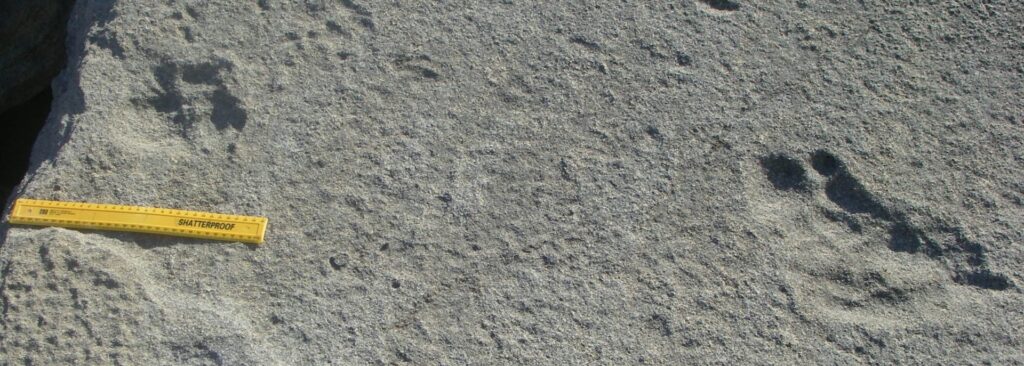
Through our work as ichnologists (involving the study of fossil tracks and traces) and in combination with the regional body fossil record, we are building a picture of the animals that populated the region in that distant past.
Since 2008 our team of fossil hunters has identified more than 400 vertebrate tracksites in this southern Cape area of South Africa. We search for the fossilised tracks that creatures made thousands of years ago on sandy surfaces which have since hardened into rock.

